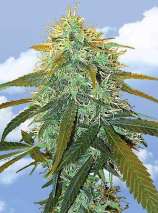
Skunk #1 by Flying Dutchmen
16 other breeders' versions of Skunk #1 — compare flowering times side by side →
Skunk #1 is unequivocally one of the most important and influential cannabis strains in history, single-handedly providing the genetic foundation for a massive portion of the modern cannabis industry. The masterpiece was developed in the 1970s by David Watson, universally known as "Sam the Skunkman," alongside the underground Northern California breeding collective known as Sacred Seeds. Following law enforcement raids in California, Watson relocated to Amsterdam in 1985, bringing an estimated 250,000 seeds with him and forever changing the trajectory of global cannabis cultivation.
The genius of Skunk #1 lies in its flawless polyhybrid genetics, meticulously crafted by crossing three distinct landrace strains: Afghani (Indica), Colombian Gold (Sativa), and Acapulco Gold (Sativa). Through rigorous selection and open-pollination over multiple generations, Watson created a stable, true-breeding hybrid. This breakthrough delivered the structural stability and rapid flowering of an indica, paired with the complex, cerebral high and massive yields of classic sativas. The result was a strain so potent and distinctively aromatic that "skunk" quickly became the colloquial term for high-quality cannabis worldwide.
Skunk #1 exploded in global popularity after winning the inaugural High Times Cannabis Cup in 1988, proving that indoor cultivation could produce world-class cannabis. Today, its legacy is practically inescapable. Because of its incredible genetic stability, it has been used as the primary building block for countless legendary strains, including Super Skunk, Jack Herer, and UK Cheese. Without Skunk #1, the modern landscape of highly potent, reliable, and aromatic cannabis simply would not exist.
🌿 Start a Skunk #1 journal — free →
Similar strains
| Breeder | Flying Dutchmen |
|---|---|
| Type | mostly indica |
| Flowering time | ±78 days |
| Environment | Outdoors |
| Lineage | Skunk Nr1 |
🌱 Get Skunk #1 seeds →
Affiliate link — supports Cultivar at no cost to you.
🧬 Explore the family: Skunk Nr1
Ancestry Pedigree
Cultivators Choice
Original Strains
Original Strains
Original Strains
Growing Skunk #1: what to expect
As an indica-leaning plant, expect a modest stretch after the flip (roughly 50–100%) and dense bud structure — which makes late-flower humidity discipline the main risk: keep RH in the 40s once buds fatten to stay ahead of mold. Growers familiar with Skunk Nr1 will recognize much of its behavior. Whatever the listing says, the cut in YOUR tent is the ground truth: log feedings, readings, and photos, and let the trends — not the label — drive decisions.
Skunk #1 FAQ
How long does Skunk #1 take to flower?
Skunk #1 typically flowers in around 78 days after switching to a 12/12 light schedule. Individual phenotypes vary, so judge harvest readiness by trichome color, not the calendar.
Is Skunk #1 an indica or a sativa?
Skunk #1 is listed as mostly indica.
What are the parents of Skunk #1?
Skunk #1 was bred from Skunk Nr1 by Flying Dutchmen.
What environment does Skunk #1 like?
Standard cannabis bands work well: VPD 0.8–1.1 kPa in veg and 1.0–1.4 kPa in flower, with humidity stepping down from 65–75% as a seedling to 40–50% in late flower. See the stage-by-stage table on this page.
📷 Growing Skunk #1 and something looks off? Free AI photo diagnosis →
Facts compiled from public breeder listings. Growing Skunk #1? A structured journal — with your feedings, readings, and photos — is how you find what THIS cut actually wants.
Track your own grow free — the journal grades your environment against these bands →
Get the one-page grow reference card
VPD, pH by medium, deficiency symptoms and dry/cure targets on a single printable page. Free — plus the occasional grow-data breakdown. No spam, unsubscribe in one click.